
Pain in the Butt? What to Know About Sciatica During Pregnancy
Written by Kelsie Mazur, DPT
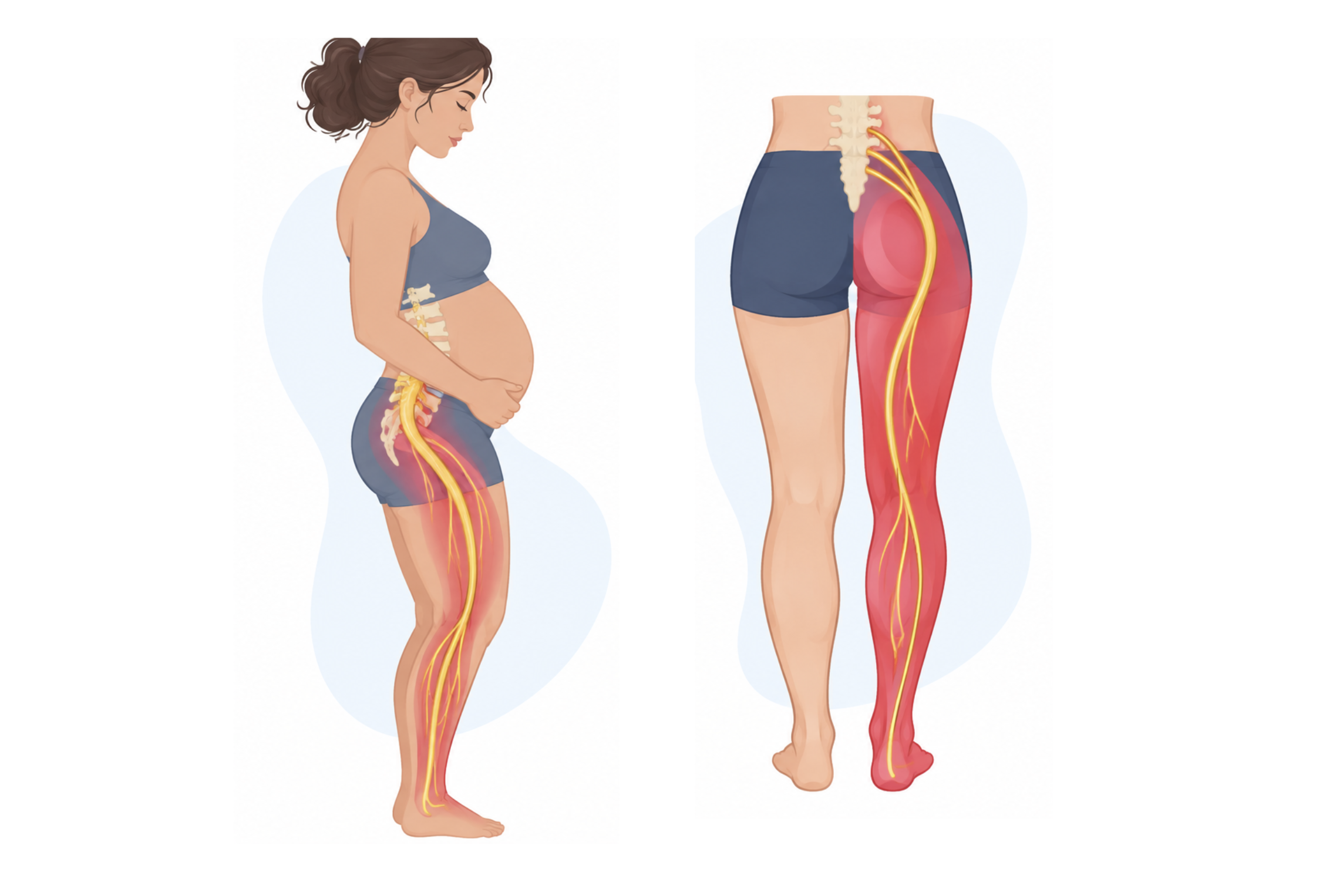
If you’re pregnant and experiencing pain in your buttock, hip, or down the back of your leg, you’re not alone. Pregnancy brings a lot of changes to the body, and sometimes those changes can lead to pain that makes everyday activities like walking, sleeping, getting dressed, or simply getting comfortable on the couch feel much harder than they should. One term you may hear is sciatica. But here’s something important to know: not all buttock or leg pain during pregnancy is actually sciatica. Understanding where your pain is coming from can help you find the right treatment and get back to moving more comfortably.
So, what exactly is sciatica?
The sciatic nerve is a large nerve that travels from your lower back, through your buttock, and down the back of your leg. When the nerve roots that contribute to it or the nerve itself become irritated, you may experience symptoms commonly described as sciatica. These symptoms can include sharp, shooting, burning, or electric-like pain that travels down your leg. You may also experience tingling, pins and needles, numbness, or, in some cases, muscle weakness. Symptoms often affect one side of the body, although everyone’s experience can be different. Here’s where things can get a little confusing. Pain in your buttock, hip, or pelvis does not automatically mean you have sciatica. Pregnancy-related pelvic girdle pain, irritation of the muscles around your hip, and other musculoskeletal conditions can cause similar symptoms. Even though these conditions may feel alike, they do not necessarily have the same cause or require the same treatment.
During pregnancy, your body is constantly adapting to accommodate your growing baby. Your center of gravity shifts, your movement patterns may change, and your back, pelvis, and hips are continually adjusting to new demands. Hormonal changes also affect your connective tissues, while your abdominal muscles, pelvic floor, and hip muscles adapt to support movement and manage pressure through your trunk and pelvis. None of this means your body is broken, your pelvis is out of alignment, or something is necessarily wrong. It simply means your body is going through significant changes. For some people, those changes may contribute to back pain, pelvic discomfort, or symptoms that travel into the leg.
You might notice symptoms when sitting for long periods, standing or walking, rolling over in bed, getting in and out of the car, climbing stairs, or putting on your pants while standing on one leg. Paying attention to which activities aggravate your symptoms can provide useful information about what may be contributing to your pain.
So, what can you do about it?
One of the best things you can do if you’re experiencing sciatica-like pain during pregnancy is to see a Doctor of Physical Therapy (DPT), ideally one who specializes in pelvic health. They can assess your symptoms, evaluate how your back, pelvis, and hips are working together, and develop a treatment plan tailored to you and your pregnancy.
But let’s talk about something I see all the time: the idea that you just need to stretch. If you look on Instagram, which unfortunately is where many people turn for health information, you’ll likely find countless stretches advertised as the solution for sciatica. Stretch your piriformis! Stretch your hamstrings! Try this one stretch to make your pain disappear!
But here’s the thing: stretching is not always the answer.
There is no one-size-fits-all approach to treating sciatica during pregnancy. What helps one person may actually aggravate another person’s symptoms. While a stretch might temporarily relieve your pain, that doesn’t necessarily mean it is addressing the underlying issue. In some cases, stretching may further irritate an already sensitive nerve or increase your symptoms. If you repeatedly try stretches that make your pain worse, it may be time to stop and get an individualized assessment instead of trying another variation you found online.
This is why identifying the source of your pain matters. Is it truly nerve-related pain? Is it coming from the muscles around your hip? Is it related to your pelvic joints or another structure? These conditions can feel similar, but they may require different treatment approaches. Depending on your assessment, a physical therapist may recommend specific exercises, movement modifications, strength training, mobility work, or other individualized treatment strategies. You may benefit from changing how you approach certain activities, taking more frequent movement breaks, or temporarily modifying movements that consistently aggravate your symptoms.
For example, if sitting for a long time makes your pain worse, changing positions regularly or breaking up your sitting time may help. If walking for extended periods increases your symptoms, shorter walks with rest breaks may feel more manageable. There is no single posture you need to maintain throughout the day, and you do not need to force yourself through movements that consistently make your symptoms worse. Pelvic health physical therapy is also about much more than pelvic floor exercises. Your therapist may assess your hip mobility, strength, movement patterns, abdominal muscles, and pelvic floor coordination when indicated. Treatment should be based on your individual presentation, rather than assuming every pregnant person with buttock pain needs the same stretch or exercise.
You also do not need to wait until your pain becomes unbearable before seeking help. If your symptoms are affecting your sleep, walking, exercise, or ability to complete everyday activities, talk with your prenatal healthcare provider about whether a pregnancy-informed physical therapy assessment may be appropriate.
You do not have to simply accept pain that limits your daily life until your baby arrives. Sciatica-like symptoms during pregnancy can be frustrating, uncomfortable, and sometimes frightening, but understanding what is causing your pain is an important first step toward finding relief. Your body is adapting to a significant physical change, and it is okay to need support along the way. Rather than trying every stretch you see online, find a provider who can assess your symptoms, listen to your concerns, and help you figure out what is right for you.
Let’s chat! Book an assessment and let’s get you back to feeling good in your body.
No referrals, no waiting, just answers. Did you know that we offer free 1-on-1 injury screens? Wattage Physical Therapy will take an in depth look at your ergonomics, posture, muscle tone, muscle weaknesses, and movement patterns to create a plan for YOU. If this article intrigues you, you can directly email me, Kelsie at Kelsie@wattagept.com. I would be happy to help you start the process of living a life free from pain.