
Biceps Tendinopathy Explained: Load Over Rest Every Time
Written by Kelsie Mazur, DPT
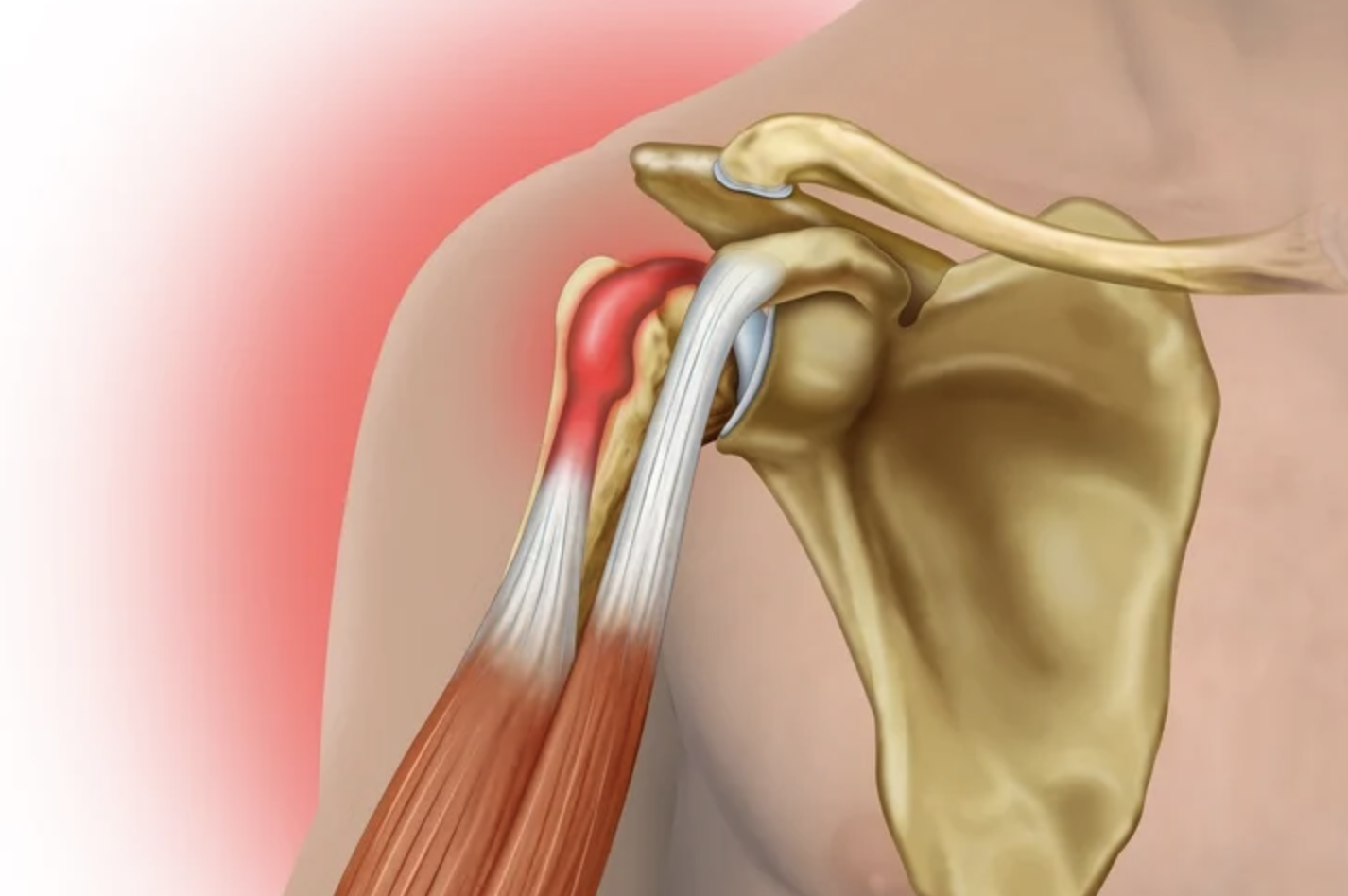
There seems to be a growing wave of biceps tendon pain right now, and I am seeing it both at the front of the shoulder and sometimes even down toward the elbow. Most people assume this is a simple injury that needs rest, but what we are usually dealing with is tendinopathy. Tendinopathy simply means the tendon has been overloaded over time and is now sensitive, not that it is damaged in a way that requires protection or complete rest.
The key thing to understand is this: tendons do not recover from rest alone. Tendons adapt to load. They get stronger, more resilient, and more tolerant through progressive, controlled loading, not avoidance. When a tendon becomes painful, it is not a sign that it needs to be shut down completely. It is a sign that its current capacity has been exceeded and needs to be rebuilt gradually.
The shoulder is also a highly complex system, not just a simple ball-and-socket joint working in isolation. When we talk about overhead lifting, reaching, or pulling, we are really talking about coordination between the glenohumeral (ball-and-socket) joint and the scapula (shoulder blade). The shoulder blade has to rotate, tilt, and glide properly on the rib cage in order for the biceps tendon and surrounding structures to work efficiently. When that coordination breaks down, the biceps tendon often ends up taking on more load than it was designed for. This is why shoulder pain is rarely just a local issue. It is usually a movement system problem involving both the shoulder blade and the ball-and-socket joint working together.
The biceps tendon plays a role in both shoulder stability and elbow function, which is why symptoms can show up in different places. Some people feel it in the front of the shoulder, some in the mid-biceps region, and others closer to the elbow. This can be confusing, but it reflects how integrated the system is rather than a single isolated issue. Most of the time, this develops from repeated stress over time, such as high-volume gym training, overhead pressing, pulling movements, or occupational demands that require thousands of repetitions a week.
What I emphasize with patients is that the goal is not to rest until pain disappears. The goal is to rebuild capacity so the tendon can tolerate real life again. Rest might calm symptoms temporarily, but it does not increase the tendon’s ability to handle load in the future. That is where people get stuck. They feel better, return to the same demands, and the pain comes right back because nothing about the system’s capacity has actually changed.
The real solution is strategic loading. That means gradually exposing the tendon to appropriate stress so it adapts and becomes stronger over time. When combined with improving scapular control, upper back mobility, and overall movement mechanics, the tendon can be trained back to full function. In many cases, patients actually become stronger and more resilient than they were before symptoms started.
The bottom line is simple. Tendons do not need rest to recover. They need load. The right amount, at the right time, applied consistently, is what drives recovery and long-term resilience.
Let’s chat! Book an assessment and let’s get you back to feeling good in your body.
No referrals, no waiting, just answers. Did you know that we offer free 1-on-1 injury screens? Wattage Physical Therapy will take an in depth look at your ergonomics, posture, muscle tone, muscle weaknesses, and movement patterns to create a plan for YOU. If this article intrigues you, you can directly email me, Kelsie at Kelsie@wattagept.com. I would be happy to help you start the process of living a life free from pain.