
C-Section Recovery: The Part No One Talks About (But Should)
Written by Kelsie Mazur, DPT
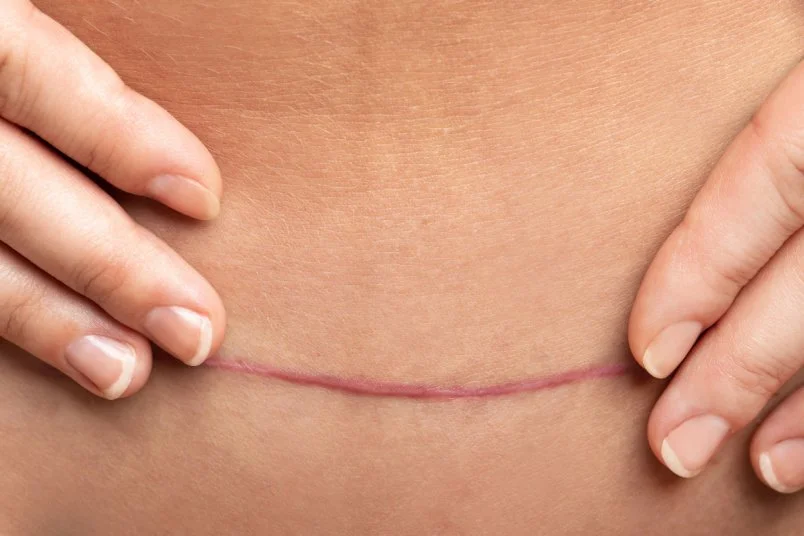
If you have had a C-section, there is a good chance you were told something like this at your 6-week follow-up: “You’re healed. You’re cleared.” (Now, I would need another 10 pages to passionately write about the lack of postpartum care women receive in the U.S., but we will save that for another blog.)
But if you walked out of that appointment still feeling tight, disconnected, weak, or just not like yourself, you are not alone. And more importantly, you are not wrong for feeling that way.
Let’s be real for a second: a C-section is a major surgery. To be exact, seven layers are cut to bring your baby into the world. This includes skin, fascia, muscle, and the uterus. That is not something small, and it is not something your body simply bounces back from in a few weeks. So if something still feels off, that makes sense. This is why support after a C-section matters.
Seeing a physical therapist after a C-section is not just helpful—it is important. Not just for healing now, but for how your body will move and function long term. This matters for your day-to-day life, for exercise, and especially if you plan to have more children. Your body deserves more than being told you are “cleared.” It deserves to be supported through the full recovery process.
One of the most overlooked parts of recovery: your scar.
One of the biggest pieces of that recovery is your scar. Not just how it looks, but how it feels physically and how it sits with you emotionally. Scar tissue forms as your body heals, and often, there is much more of it than people expect. That buildup can create tightness, restriction, numbness, or a pulling feeling with movement.
It can also contribute to:
-Core weakness
-Hip or low back discomfort (this is a common one)
-A feeling of disconnection in your body
-Changes in how your pelvic floor functions
-Part of the work is simply recognizing that your scar is there and that it has an impact.
-What we actually do to help as Physical Therapists
This is where hands-on work becomes so important. We use different forms of manual therapy, including massage, to help the tissue start to move more freely. This is not aggressive. It is intentional and progressive, based on what your body can tolerate.
We also use specific cupping techniques to gently lift the scar tissue. This helps create space and improves how the layers underneath glide against each other.
And one of the most effective tools we use is dry needling around the scar and surrounding areas. This helps improve blood flow, reduce tension, and support the healing process in a deeper way.
Manual therapy for C-section recovery
Manual therapy is a hands-on approach that helps restore movement and reduce restriction around your scar and surrounding tissues. Through gentle massage and soft tissue work, we help the different layers of your body begin to glide more normally again. This can decrease tightness, improve circulation, and help reconnect your core. It is also a way to reintroduce touch to the area in a safe and supported way, especially if things have felt numb, sensitive, or unfamiliar.
Cupping for C-section scar tissue
Cupping is a technique we use to gently lift the tissue instead of pressing down into it. Around a C-section scar, this can be incredibly helpful because it creates space between the layers that may feel stuck or restricted. By lifting the tissue, we can improve blood flow, encourage mobility, and reduce that pulling sensation many women feel. It is a different sensation than massage, but when used appropriately, it can be very effective in helping the scar move more freely.
Dry needling for scar tissue and surrounding areas
Dry needling is used to support deeper healing in and around the scar. By placing very small needles in specific areas, we can help improve blood flow, reduce muscle tension, and stimulate the body’s natural healing response. This can be especially helpful for areas that feel tight, guarded, or not fully connected. When used thoughtfully, dry needling can complement manual therapy and cupping, helping the tissue respond and adapt more effectively over time.
All of this is done with care, communication, and respect for where you are in your recovery. Most importantly, we follow each of these techniques with intentional movement to create lasting change in the muscles of your core and pelvic floor.
This is about more than healing. This is about feeling like yourself again in your body. It is about being able to move, lift, exercise, and live your life without that constant sense that something is off. It is about setting your body up not just for now, but for the years ahead. Because your recovery did not end at six weeks, and you deserve support that reflects that.
Let’s chat! Book an assessment and let’s get you back to feeling good in your body.
No referrals, no waiting, just answers. Did you know that we offer free 1-on-1 injury screens? Wattage Physical Therapy will take an in depth look at your ergonomics, posture, muscle tone, muscle weaknesses, and movement patterns to create a plan for YOU. If this article intrigues you, you can directly email me, Kelsie at Kelsie@wattagept.com. I would be happy to help you start the process of living a life free from pain.