
Diastasis Recti: What’s Actually Going On With Your Core?
Written by Kelsie Mazur, DPT
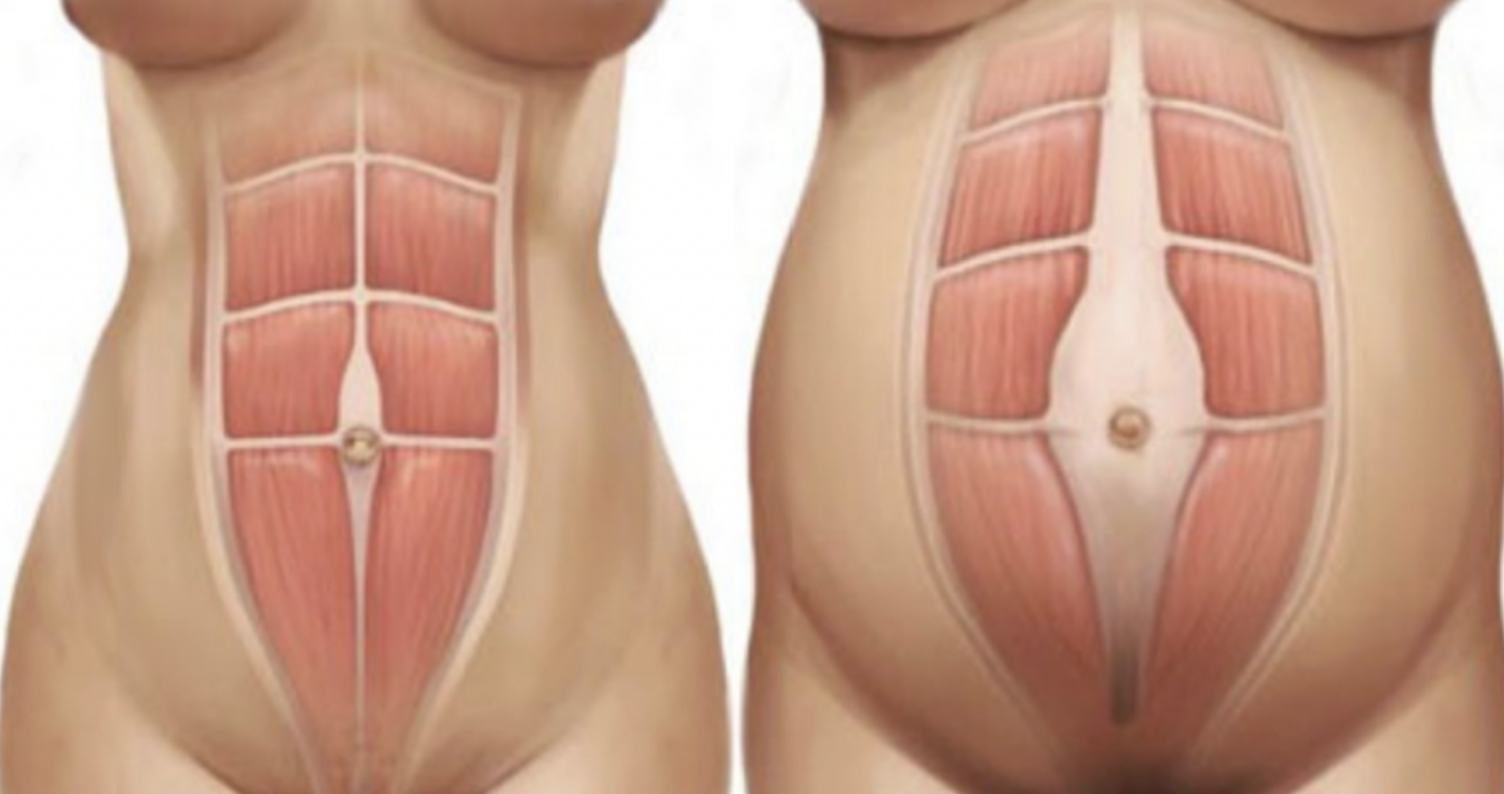
If you’ve ever noticed a little ridge or “doming” down the middle of your abdomen when you sit up, exercise, cough, or get out of bed, you may have heard the words diastasis recti. And if that phrase immediately made you think, “Wait… is something wrong with me?” take a breath.
Diastasis recti is a common change in the abdominal wall, particularly during and after pregnancy. But despite how often it gets talked about online, it isn’t something that automatically means your core is “broken,” damaged, or in need of fixing. Your body is much more adaptable than that.
So, what exactly is happening?
Your abdominal wall isn’t just one big sheet of muscle. It’s more like a team, with several muscles working together to help support your trunk and allow you to move. One of the muscles you’re probably familiar with is the rectus abdominis, the muscle commonly associated with the “six-pack.” There’s a left side and a right side, and they meet near the center of your abdomen along a band of connective tissue called the linea alba. (Think of the linea alba as a strong seam connecting the two sides.)
During pregnancy, the abdomen has to adapt to a growing baby. As the uterus expands, the abdominal wall stretches, and the connective tissue between the two sides can become wider and more flexible. That separation or widening is what we refer to as diastasis recti. And here’s an important part that often gets lost in the conversation: your body is supposed to change.
Pregnancy asks an enormous amount of effort from the body. Your ribs can expand, your posture can change, your abdominal wall stretches, your pelvic floor adapts, and your organs literally make room for another human. These changes aren't evidence that your body has failed. They are examples of your body adapting to an enormous physical event.
But what about the “gap”?
This is where diastasis recti can get a little overcomplicated. You may have seen people online talking about measuring the space between the abdominal muscles using their fingers, almost as though there is one magic number that determines whether your core is “normal” or “not normal.” But bodies are a little more interesting than that.
The width of the space is only one piece of the puzzle. The quality and tension of the connective tissue, how your abdominal wall responds to pressure, how you move, and whether you actually have symptoms can all be relevant. In other words, we aren't just interested in asking, “How big is the gap?” We also want to ask, “How is your abdominal wall functioning?
Some people have diastasis recti and don't experience any symptoms at all. Others may notice changes in the appearance of their abdomen, a feeling of weakness or reduced support through their trunk, difficulty with certain movements, or discomfort. And this is another reason not to panic based solely on what your stomach looks like. Abdominal discomfort, weakness, back pain, or changes in movement can have many different causes. A visible ridge or abdominal shape doesn't tell the whole story.
And yes, men can experience diastasis recti too.
Diastasis recti is often discussed in the context of pregnancy, so it can sound like something that only women experience. That's not the case. Men can develop diastasis recti as well, and it can occur at different stages of life.
In men, factors that repeatedly increase pressure on or stretch the abdominal wall may contribute. These can include significant weight gain or obesity, substantial changes in body size, aging-related changes in muscle and connective tissue, previous abdominal surgery, certain conditions that increase abdominal pressure, and repetitive or very high physical demands. Some men may also develop it without one obvious cause.
That means a man in his 40s, 50s, 60s, or beyond can absolutely experience changes in the abdominal wall. It isn't exclusively a “postpartum” issue. It's also worth remembering that lifting weights or being active does not automatically cause diastasis recti. Exercise is not the enemy here. Your abdominal wall is designed to handle pressure and load. The goal is to help the body gradually build its capacity to manage those demands rather than becoming afraid of movement.
So, should you avoid certain exercises?
Your body isn't a fragile piece of glass. Your abdominal muscles are designed to move, contract, stretch, and respond to pressure. As you recover from pregnancy, surgery, an injury, or simply work on building strength, you can gradually expose your body to different movements and loads. Sometimes that means modifying an exercise. Sometimes it means slowing things down or changing your breathing and technique. Sometimes it means getting guidance from a physical therapist. And sometimes it means discovering that the exercise you were told to avoid isn't actually a problem for you.
There isn't one universal list of exercises that everyone with diastasis recti must avoid.
If you have diastasis recti, you haven't done anything wrong. You don't need to panic about every abdominal exercise, constantly check your stomach for a gap, or spend hours on the internet/instagram trying to figure out whether your body is “normal.” Your core is so much more than a six-pack. It's a whole system working with your diaphragm, pelvic floor, spine, hips, and the rest of your body to help you breathe, move, lift, carry, laugh, sneeze, exercise, and live your life.
The goal isn't necessarily to make your abdomen look exactly the way it did before pregnancy, weight changes, aging, or other life experiences. Instead, the focus can be on function, strength, comfort, confidence, and getting back to the activities you enjoy. Rehabilitation may involve breathing, coordination, learning how to manage pressure through your trunk, and gradually building abdominal and whole-body strength. For some people, working with a physical therapist who understands the abdominal wall and pelvic health can be particularly helpful.
Let’s chat! Book an assessment and let’s get you back to feeling good in your body.
No referrals, no waiting, just answers. Did you know that we offer free 1-on-1 injury screens? Wattage Physical Therapy will take an in depth look at your ergonomics, posture, muscle tone, muscle weaknesses, and movement patterns to create a plan for YOU. If this article intrigues you, you can directly email me, Kelsie at Kelsie@wattagept.com. I would be happy to help you start the process of living a life free from pain.