
Hot Take: Stop Wearing the Weight Vest. Start Lifting for Osteoporosis
Written by Kelsie Mazur, DPT
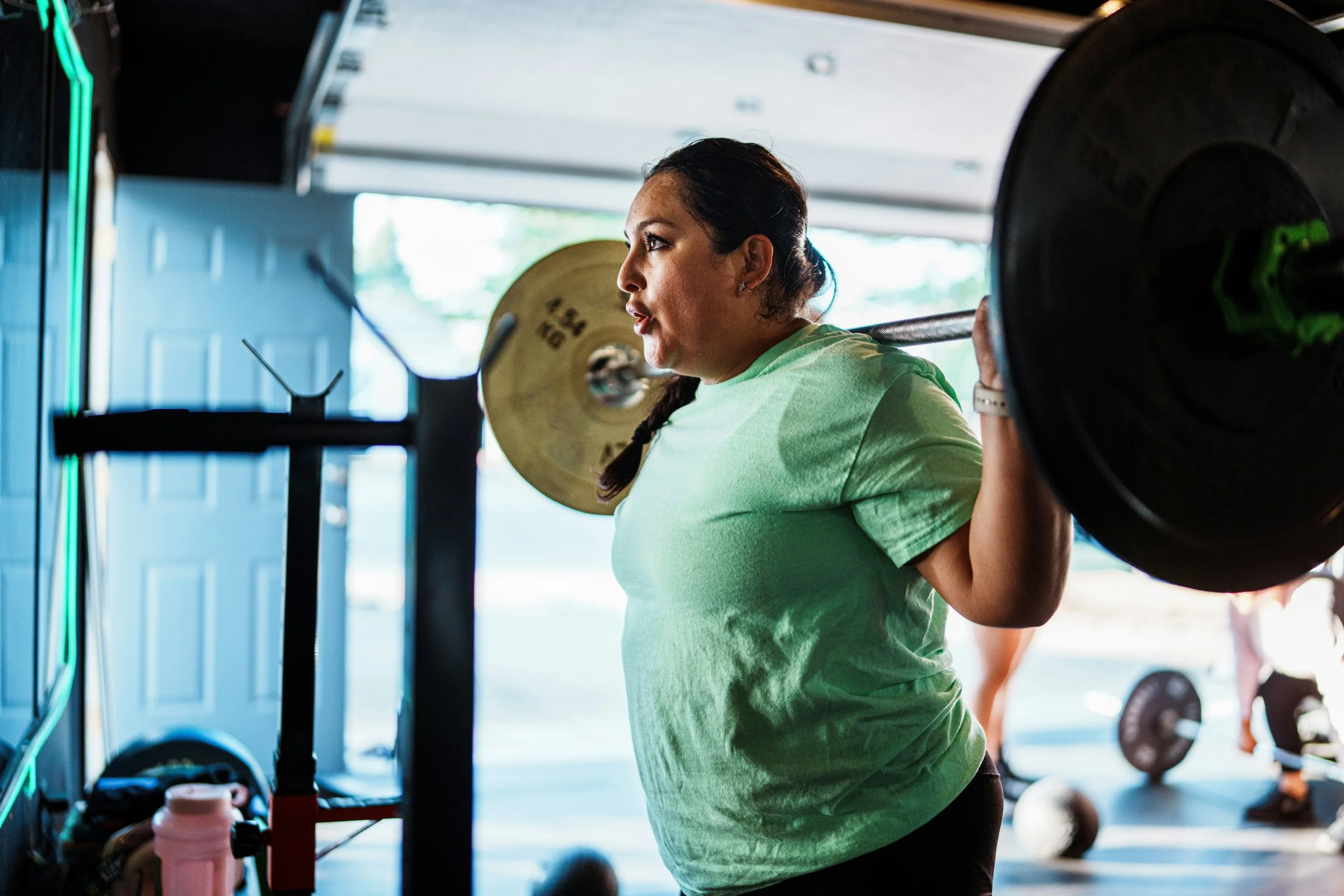
Let's talk about osteoporosis, because women deserve better information when it comes to protecting their bone health. I recently had a patient come in and tell me that her functional MD recommended she purchase a weighted vest and wear it for 7 hours day after her most recent DEXA scan revealed osteopenia.
Let’s talk about this.
Over the last few years, weighted vests have become increasingly popular, particularly among women looking to prevent age-related bone loss and improve bone mineral density. The idea sounds reasonable enough: bones respond to mechanical loading, so adding extra weight to your body throughout the day should theoretically encourage stronger bones. Some women are even wearing weighted vests for six or seven hours a day, believing that the additional load will help prevent osteoporosis.
But here is where I want to challenge that thinking: simply carrying additional weight via wearing a weighted vest throughout the day is not the same thing as actively training your bones.
Bone is living tissue. It is constantly remodeling in response to the mechanical demands placed upon it. When muscles contract against resistance, they generate forces that transfer through tendons and onto bones. These forces create a mechanical stimulus that helps signal bone remodeling and adaptation. The magnitude, direction, rate, and variation of that loading all matter. In other words, your bones respond to how you load them, not simply how many hours you spend carrying additional weight.
If the goal is to improve bone health, the focus needs to shift from wearing additional weight throughout the day to actively challenging the skeleton through progressive resistance training and impact loading.
And when I say resistance training, I mean actually challenging your body with progressively heavier loads. Yes, I am talking about barbells. Deadlifts. Back squats. Loaded lunges. Split squats. Weighted step-ups. These are the types of movements women should become comfortable performing as part of a well-designed strength-training program.
Think about what happens during a barbell back squat or deadlift. Your muscles must generate substantial force to move an external load, creating mechanical demands throughout the musculoskeletal system. As your strength improves, you progressively increase the resistance, challenging your muscles, tendons, and bones to adapt. This provides a meaningful training stimulus that simply wearing a lightweight vest while walking around for several hours may not adequately replicate.
And let's not forget about jumping.
Impact-based exercise introduces relatively rapid loading forces that can provide an additional stimulus for bone adaptation. Depending on an individual's bone health, fracture history, and physical capacity, jumping, hopping, and other impact-based exercises can be valuable additions to a comprehensive bone-loading program.
We also need to incorporate more single-leg movements. Lunges, split squats, and weighted step-ups challenge the lower extremities through different loading demands while developing strength, balance, coordination, and functional capacity. These are all important qualities as women age.
Now, I am not suggesting that weighted vests are completely useless. They can be a helpful tool when incorporated into an appropriately designed exercise program. Adding a weighted vest to walking or other weight-bearing activities may increase the overall loading demand.
However, the evidence supporting prolonged daily vest use as a standalone strategy for meaningfully improving bone mineral density remains limited.
We should not confuse an intervention that sounds biomechanically reasonable with one that has demonstrated meaningful clinical benefits. Wearing a weighted vest for seven hours a day is not a substitute for a structured strength-training program.
My Big 3:
First, progressive resistance training. Ideally, women should participate in two to three strength-training sessions per week, addressing the major muscle groups throughout the body. Build toward meaningful resistance with exercises such as barbell squats, deadlifts, lunges, rows, presses, and weighted carries. The goal is not to lift the heaviest weight possible on day one. The goal is to progressively build strength and expose your skeleton to appropriate mechanical demands over time.
Second, incorporate impact-based exercise when appropriate. Walking, stair climbing, hiking, dancing, jogging, jumping, and hopping can all contribute to a comprehensive weight-bearing exercise program. The type and intensity of impact should be individualized, particularly for women with established osteoporosis or a history of fragility fractures.
Third, remember that bone health extends beyond exercise. Adequate calcium, vitamin D, protein, and overall nutritional intake all contribute to maintaining healthy bones. Hormonal changes associated with menopause also play a significant role in bone loss, which is why we need to consider the bigger picture rather than relying on one exercise tool or intervention.
Here is what I really want women to understand: osteoporosis is not a reason to avoid lifting weights. It is a reason to become more intentional about strength training.
Too often, women are told to be careful as they get older, avoid heavy lifting, and protect their backs. While certain precautions are absolutely appropriate depending on bone density and fracture history, avoiding resistance training altogether can contribute to declining muscle mass, reduced strength, impaired balance, and diminished functional capacity. We should be empowering women to become stronger, not convincing them that their skeletons are too fragile to handle appropriately prescribed exercise.
I would much rather see a woman spend 45 minutes performing a thoughtfully designed strength-training program two or three times per week than spend seven hours wearing a weighted vest under the assumption that she is actively building stronger bones.
I want women confidently picking up barbells, learning to squat, deadlifting, performing weighted lunges and step-ups, and incorporating jumping and impact exercise when appropriate. I want women to understand that their skeleton is adaptable and that progressive mechanical loading is one of the most important tools we have for maintaining musculoskeletal health as we age.
Your bones need a reason to adapt. Give them one.
Let’s chat! Book an assessment and let’s get you back to feeling good in your body.
No referrals, no waiting, just answers. Did you know that we offer free 1-on-1 injury screens? Wattage Physical Therapy will take an in depth look at your ergonomics, posture, muscle tone, muscle weaknesses, and movement patterns to create a plan for YOU. If this article intrigues you, you can directly email me, Kelsie at Kelsie@wattagept.com. I would be happy to help you start the process of living a life free from pain.